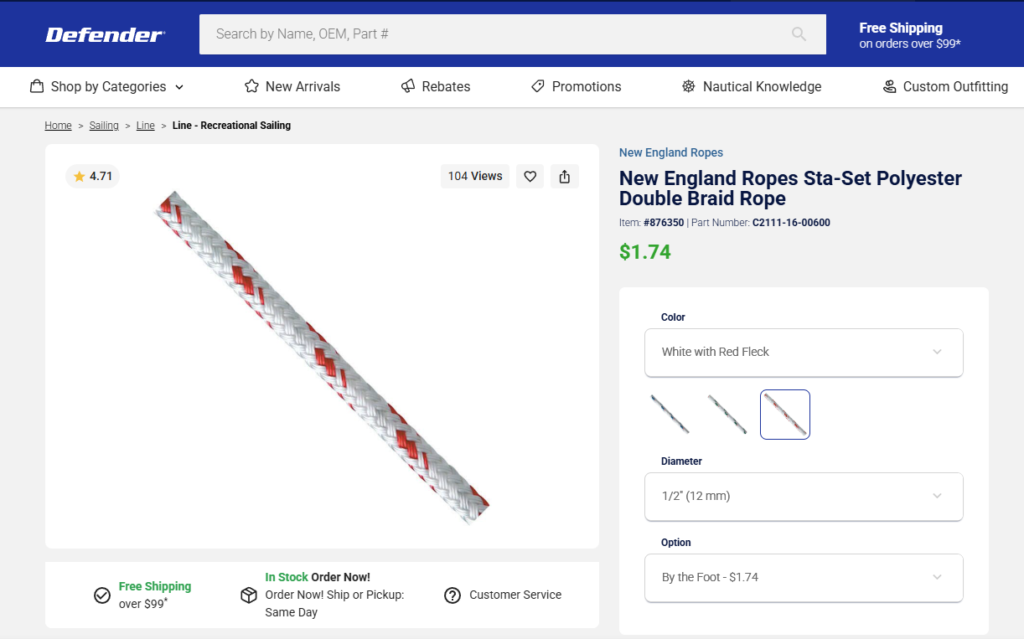
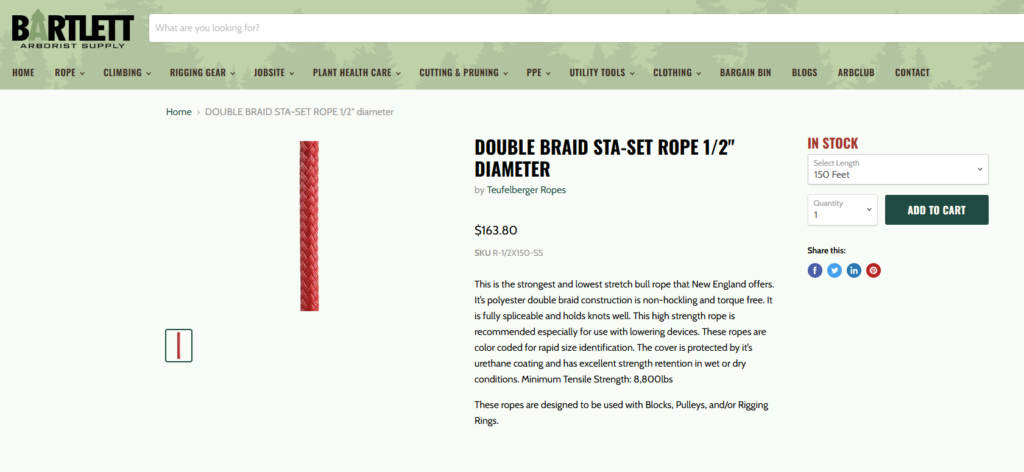
Where’s the best place to buy rope? Well, it might make sense to look outside the recreational marine industry. I recently decided to replace Momo’s worn-out staysail and jib sheets. When looking for 1/2″ Sta-Set by New England Ropes, the best price I could find from a chandlery was $1.74 per foot at Defender. But after searching around a bit , I found that rope is significantly cheaper in the world of arborist supply. Bartlett Arborist Supply was selling 1/2″ Sta-Set under the Teufelberger brand (the Austrian Teufelberger group bought out New England Ropes back in 2007) for just $1.09 per foot. The downside with arborist supply stores is that they offer fewer colours and sell their rope in large fixed quantities.
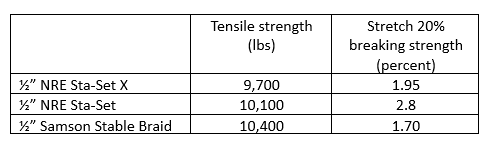
Having come across the Bartlett website, I was drawn to Samson Stable Braid, which doesn’t show up on chandlery websites. On paper at least, it performs better than Sta-Set. It is slightly stronger and has less stretch. Coated with Samthane (polyurethane), it also has excellent abrasion resistance.
It also costs less. Bartlett was selling 150-foot lengths in blue and red for $134.55, or $0.90 per foot — just over half the price of Sta-Set at Defender. I bought blue for the jib and red for the staysail.
The rope has a bit of a shimmer to it, which I Imagine is the Samthane coating. It is very soft and supple and feels good in the hand. Interestingly, it has even less stretch than Sta-Set-X, which, with it’s parallel core construction, is notoriously stiff. I’ve always liked Sta-Set X for halyards, in part because it is easy to splice. But setting ease of splicing aside, it would seem that Samson Stable Braid makes for a better halyard.
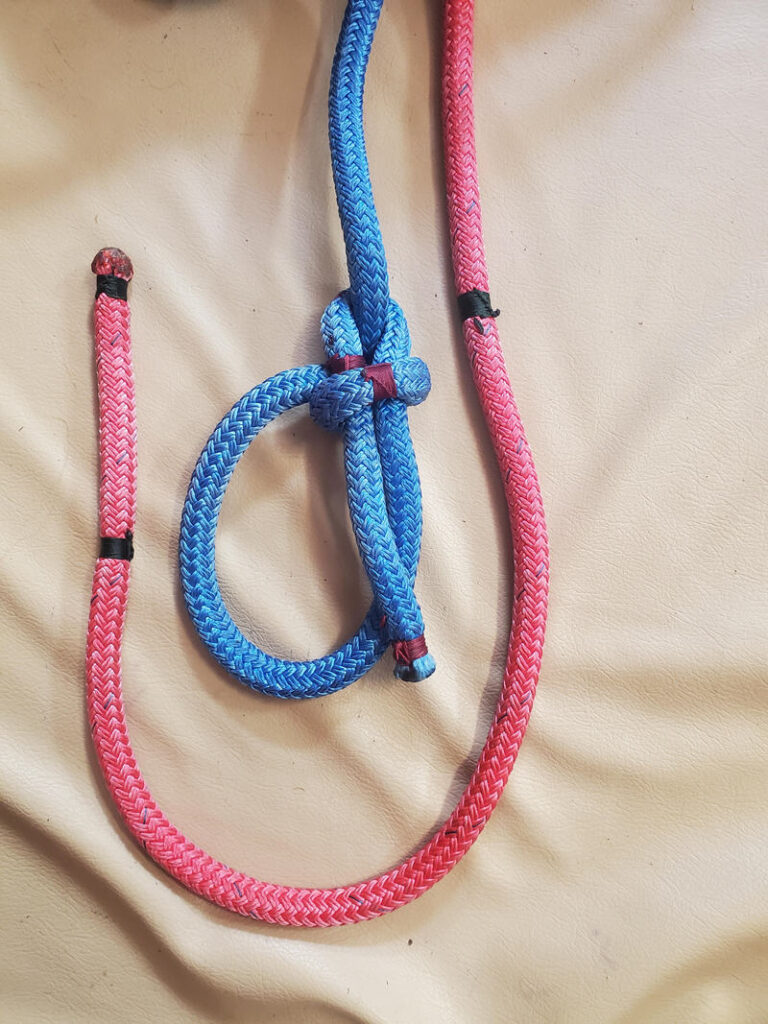
To make my life a little easier as a single-handed sailor, I sewed a number of marks in the sheets with whipping twine. On the ends that attach to the sail, I added a couple of marks that can be lined up to produce a consistently sized bowline. And I also marked the point where the line reaches the winch when the sail is close-hauled. This makes it much easier to pre-set the sails before they are raised at the mast. The marks also serve as useful reference points when tacking or jibing, especially at night.